
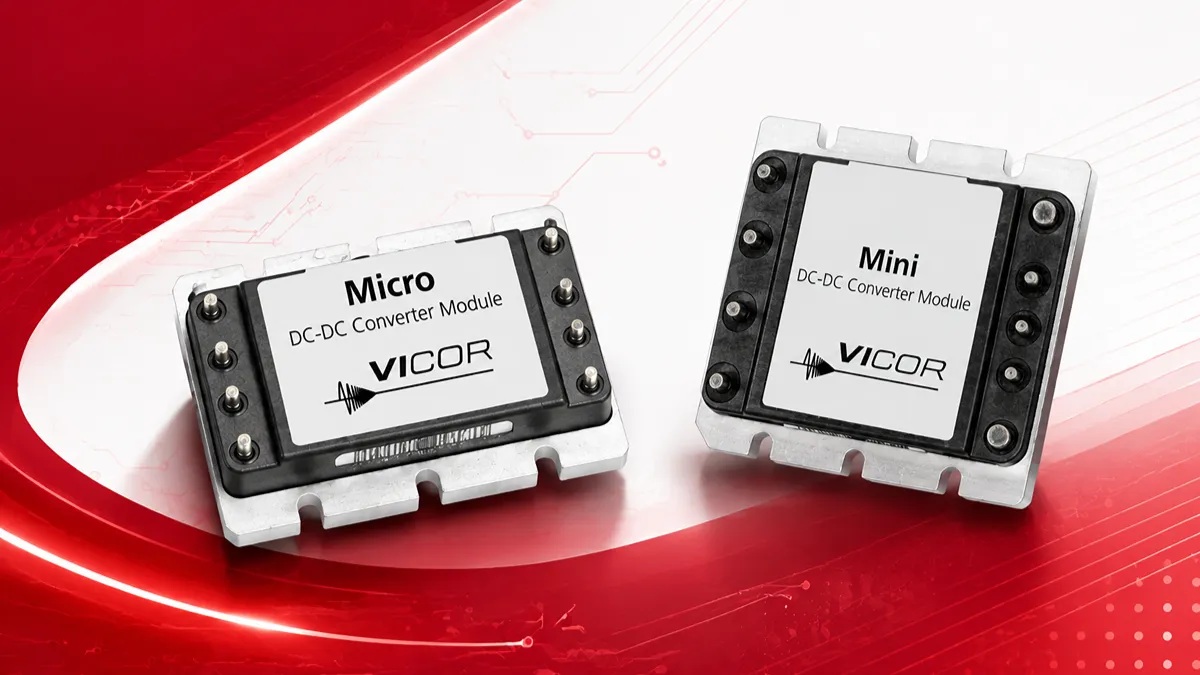
A 24V to 12V DC converter is one of the most common power conversion components used in industrial automation, automotive electronics, telecommunications equipment, robotics, marine systems, and off-grid applications. Many modern systems operate with a 24V DC power source because higher voltage allows lower current transmission and reduced cable losses. However, numerous sensors, controllers, communication devices, lighting systems, and electronic accessories still require a stable 12V DC supply.
Selecting the correct converter is not simply a matter of choosing a device with a 24V input and 12V output. Engineers must consider conversion efficiency, isolation requirements, load characteristics, environmental conditions, protection features, and long-term reliability.
This guide explains how 24V DC to 12V DC conversion works, compares converter architectures, explains key specifications, and provides practical selection and wiring recommendations for industrial and commercial applications.
Exactly How to Convert 24V DC to 12V DC
The basic purpose of a 24V to 12V DC converter is to reduce a higher DC voltage level into a lower, regulated voltage suitable for downstream electronics. The conversion process can be achieved through two primary technologies:
- Linear voltage regulation
- Switching step-down conversion (Buck converter)
Although both methods provide a 12V output, their operating principles and suitable applications are very different.
If your downstream electronics require a 5V rail instead of 12V, see How to Design and Select a 24V to 5V Converter.
Linear Voltage Regulator: Simple but Limited
A linear regulator reduces voltage by dissipating the excess voltage as heat.
For example:
- Input voltage: 24V DC
- Output voltage: 12V DC
- Load current: 2A
The regulator must remove:
Power Loss=(24V−12V)×2A=24WPower\ Loss=(24V-12V)\times2A=24WPower Loss=(24V−12V)×2A=24W
This 24W difference is converted directly into heat.
The advantages of linear conversion include:
- Very low electrical noise
- Simple circuit design
- Low electromagnetic interference (EMI)
- Low component cost for small loads
However, the disadvantages become significant in industrial applications:
- Poor efficiency
- High heat generation
- Requires large heat sinks
- Limited output current capability
Linear regulators are usually suitable for low-power applications such as reference circuits, sensors, and small control electronics.
Switching Buck Converter: The Industrial Standard
A switching converter uses high-frequency switching technology to transfer energy through inductors and capacitors.
Instead of wasting voltage difference as heat, a buck converter rapidly switches the input voltage and filters it into a stable lower voltage output.
Typical efficiency:
- Linear regulator: 40–60%
- Buck converter: 85–95%
For example, converting 24V to 12V at 5A:
| Conversion Method | Input Power | Efficiency | Heat Loss |
|---|---|---|---|
| Linear regulator | 120W | 50% | 60W |
| Buck converter | 120W | 90% | 12W |
Because of its higher efficiency, compact size, and ability to support higher current loads, the buck converter has become the preferred solution for:
- Industrial control systems
- Autonomous vehicles
- Communication equipment
- Factory automation
- Battery-powered systems
Isolated VS Non-Isolated Converters Explained
One of the most important decisions when selecting a 24V to 12V converter is whether the application requires electrical isolation.
The difference lies in whether the input and output circuits share the same electrical ground.
Non-Isolated DC-DC Converter
A non-isolated converter has a common ground between the input and output.
The circuit structure is simpler:
24V Input (+)
|
|
DC-DC Converter
|
|
12V Output (+)
Input Ground = Output Ground
Advantages:
- Smaller size
- Lower cost
- Higher efficiency
- Easier installation
Typical applications:
- Vehicle electronics
- PLC control systems
- LED lighting
- Embedded systems
- General industrial equipment
For most standard 24V industrial systems, non-isolated converters are sufficient.
Isolated DC-DC Converter
An isolated converter uses a transformer or isolation barrier to electrically separate the input and output sides.
24V Input
|
Isolation Barrier
|
12V Output
The input ground and output ground are completely separated.
Advantages:
- Prevents ground loops
- Improves electrical safety
- Reduces noise interference
- Protects sensitive electronics
Typical applications:
- Medical equipment
- Communication systems
- Measurement instruments
- Battery management systems
- Harsh industrial environments
The following table summarizes the difference:
| Feature | Non-Isolated Converter | Isolated Converter |
|---|---|---|
| Ground connection | Common input/output ground | Separated input/output ground |
| Efficiency | Usually higher | Slightly lower |
| Size | Compact | Larger due to transformer design |
| Cost | Lower | Higher |
| Main advantage | Simple and efficient power conversion | Safety and noise protection |
| Typical use | Industrial controls, vehicles | Medical, communication, precision electronics |
A common mistake is choosing an isolated converter unnecessarily, increasing system cost and size. Isolation should be selected based on electrical safety and noise requirements, not simply because it appears more advanced.
For a broader comparison of DC converter topologies, review isolated, non-isolated, bidirectional, and multiphase options.
For isolated vs. non-isolated topology considerations at higher bus voltages, see our 48V to 12V DC Converter Guide.
Options for a 24 Volt DC to 12 Volt DC Converter
24V to 12V converters are available in several physical formats. Choosing the correct structure depends on installation environment, available space, thermal conditions, and maintenance requirements.
1. PCB-Mounted DC-DC Converter
Board-level converters are designed for integration directly into electronic systems.
Advantages:
- Small footprint
- Easy PCB integration
- Low cost
- Suitable for mass production
Typical applications:
- Embedded devices
- Industrial controllers
- Communication modules
- Consumer electronics
Limitations:
- Requires external protection
- Sensitive to moisture and vibration
- Thermal management may be challenging
2. Aluminum Housing Encapsulated Converter
These converters usually feature an aluminum enclosure with internal potting material.
Advantages:
- Excellent vibration resistance
- Improved waterproof protection
- Better heat dissipation
- Suitable for outdoor environments
Typical applications:
- Automotive systems
- Marine electronics
- Solar power systems
- Construction machinery
The aluminum housing works as a heat spreader, while the encapsulation protects internal components from dust, humidity, and mechanical shock.
3. DIN Rail Mounted Converter
DIN rail converters are designed specifically for industrial cabinets.
Advantages:
- Easy installation
- Standardized mounting
- Convenient maintenance
- Professional industrial appearance
Typical applications:
- Factory automation
- PLC cabinets
- Process control systems
- Building automation
Comparison table:
| Converter Type | Main Advantage | Recommended Application |
|---|---|---|
| PCB Mounted | Compact and economical | Embedded electronics |
| Aluminum Encapsulated | Durable and weather resistant | Vehicle and outdoor systems |
| DIN Rail Mounted | Easy industrial installation | Automation cabinets |
What to Do if You Need 12V to 24V Instead
Sometimes the system requirement is reversed. Engineers may ask:
"My battery or power source is 12V, but my equipment requires 24V. What should I use?"
In this case, a boost converter is required.
A boost converter increases voltage by storing energy in an inductor and releasing it at a higher voltage level.
Common examples:
- 12V battery powering 24V industrial sensors
- Vehicle accessories requiring 24V input
- Communication equipment installed on 12V platforms
However, voltage conversion direction should not be confused:
| Requirement | Converter Type |
|---|---|
| 24V → 12V | Buck converter |
| 12V → 24V | Boost converter |
| 12V → 24V → regulated output | DC-DC boost system |
If a project contains both 12V and 24V equipment, engineers should avoid using multiple independent converters whenever possible.
Recommended design principles:
- Identify the primary power bus voltage.
- Select the most common system voltage as the main supply.
- Use converters only for secondary voltage requirements.
- Consider total efficiency and standby losses.
A properly planned power architecture reduces wiring complexity and improves system reliability.
For a detailed engineering breakdown of step-up conversion, including wire gauge and inrush protection, see How to Convert 12V DC to 48V DC for Industrial Applications.
Essential Specifications for Your Industry Applications
Choosing a converter requires more than checking voltage ratings. Industrial environments introduce temperature variation, vibration, humidity, electrical noise, and unstable loads.
The most important specifications include:
1. Temperature Derating
A converter rated at 10A does not always deliver 10A under all conditions.
As ambient temperature increases, internal components operate closer to their limits. Manufacturers often reduce allowable output current at high temperatures.
Example:
| Temperature | Maximum Output Current |
|---|---|
| 25°C | 100% |
| 60°C | 80% |
| 85°C | 50% |
Always check the derating curve before selecting a converter.
2. Waterproof and Environmental Protection
For outdoor or vehicle applications, protection level is critical.
Common ratings:
- IP54: Protection against dust and splashing water
- IP65: Dust-tight and water jet resistant
- IP67: Temporary immersion protection
Applications requiring higher protection:
- Outdoor equipment
- Marine systems
- Agricultural machinery
- Mobile robots
3. Ripple Voltage and Noise
Output ripple refers to small voltage fluctuations remaining after conversion.
High ripple can cause:
- Sensor errors
- Communication failures
- Audio interference
- Control instability
Sensitive applications should select converters with:
- Low ripple output
- EMI filtering
- Shielded design
A Practical Wiring Guide and Safety Margin Rules
Correct wiring is essential for converter reliability.
Basic Wiring
Standard connection:
24V Power Supply (+)
|
|
Converter VIN+
24V Power Supply (-)
|
|
Converter GND
Converter VOUT+
|
|
12V Load +
Converter VOUT-
|
|
12V Load -
Important practices:
- Use appropriately sized cables
- Keep input wires short
- Install proper fuses
- Avoid reverse polarity
Handling Audio Noise and Ground Problems
When powering audio systems or sensitive electronics, ground loops can create unwanted noise.
Symptoms:
- Humming sound
- Buzzing interference
- Signal distortion
Solutions:
- Use isolated converters
- Separate power and signal grounding
- Add EMI filters
- Avoid sharing noisy motor grounds
Calculating Current Margin for Motor Loads
Motor loads create startup surges.
For example:
- Motor rated current: 5A
- Startup current: 15A
A 5A converter will fail even though the normal operating current appears acceptable.
Recommended rule:
- Resistive loads: 20–30% margin
- Electronic loads: 30–50% margin
- Motor loads: 100% or more surge consideration
Example:
Motor running current: \(I=8\mathrm{A} \) Required converter rating: \(8\mathrm{A}\times1.5=12\mathrm{A}\) A 12A or higher converter would be recommended.
Where to Find Reliable Power Components Globally
After determining the correct voltage, current rating, isolation requirements, and environmental specifications, the next challenge is ensuring a stable supply chain.
Power conversion components are often critical parts of industrial equipment. Supply shortages or inconsistent quality can delay production schedules and increase development costs.
When you have confirmed the correct converter specifications and wiring solution, the most important next step is ensuring a stable supply chain for these core electronic components.
Your Global Independent Electronic Components Distributor
As a global independent electronic components distributor, Vigor Components focuses on helping customers solve the challenge of sourcing high-quality power modules.
Whether your project requires vibration-resistant and moisture-proof automotive modules or high-precision industrial isolated DC-DC converters, Vigor Components leverages a strong global sourcing network to provide sufficient inventory availability and competitive pricing.
By working with an experienced independent distributor, engineers and procurement teams can reduce supply risks, maintain production schedules, and accelerate product development.
Contact US →
Final Thoughts
Selecting a 24V to 12V DC converter requires careful evaluation of electrical requirements, environmental conditions, and application-specific challenges.
The key selection principles are:
- Use buck converters for efficient 24V to 12V conversion.
- Choose isolation only when safety or noise requirements justify it.
- Match converter type with installation environment.
- Consider temperature derating and protection ratings.
- Always calculate current margin, especially for motors and dynamic loads.
- Partner with reliable suppliers to maintain long-term component availability.
A properly selected DC-DC converter improves system efficiency, reduces failures, and ensures reliable operation across industrial, automotive, and commercial applications.