
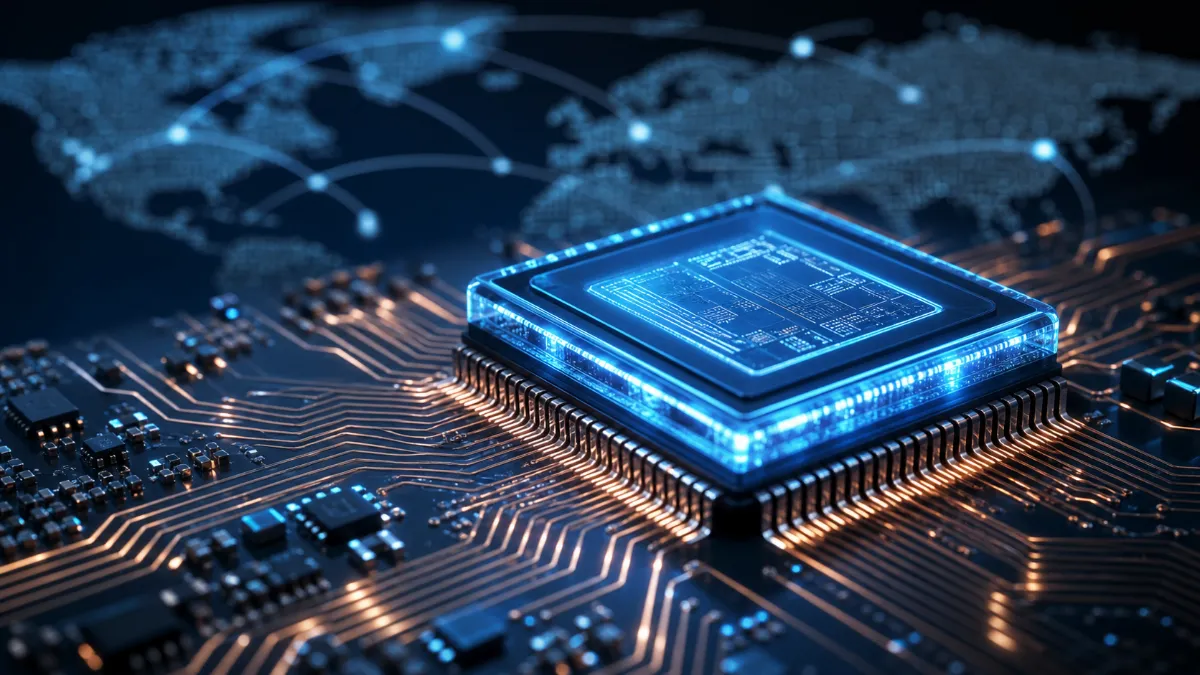
Integrated circuits (ICs) are the foundation of modern electronics, powering everything from smartphones and electric vehicles to industrial automation systems. For engineers, buyers, and technical marketers alike, understanding how to define an integrated circuit—and how it is designed, categorized, and sourced—is essential for navigating today’s semiconductor-driven world.
This guide walks you through the concept, history, structure, and practical selection of ICs, helping bridge both engineering knowledge and real-world sourcing decisions.
What Does Integrated Circuit Mean in Electronics
The Simple Definition for Beginners
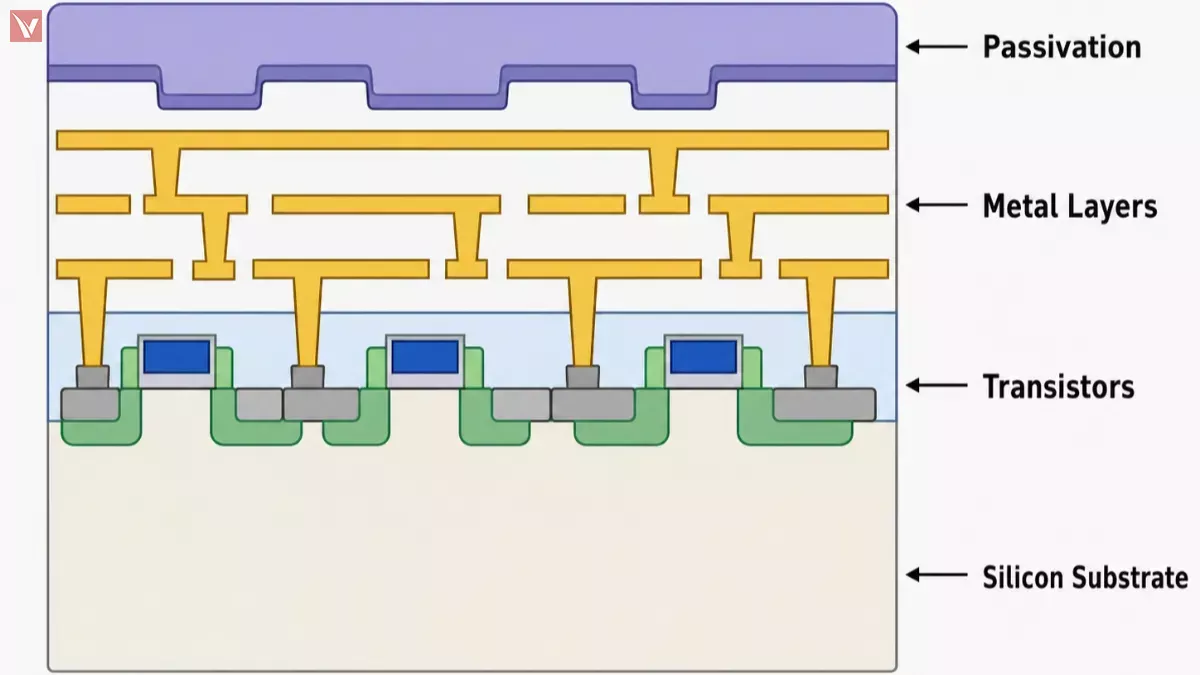
An integrated circuit (IC) is a miniaturized electronic circuit in which multiple components—such as transistors, resistors, and capacitors—are fabricated onto a single semiconductor substrate, typically silicon.
Instead of assembling individual components on a board, an IC integrates them into one compact chip, dramatically reducing size, cost, and power consumption while improving performance and reliability.
In simple terms, an IC is:
- A complete electronic circuit
- Built on a single chip
- Designed to perform a specific function (e.g., amplification, computation, signal processing)
For example, a smartphone processor is an IC containing billions of transistors performing complex logic operations in real time.
Comparing ICs with Discrete Circuits
Before ICs, circuits were built using discrete components—individual resistors, capacitors, diodes, and transistors wired together manually.
Key differences include:
- Size: ICs are exponentially smaller than discrete circuits
- Reliability: Fewer physical connections reduce failure points
- Performance: Shorter signal paths enable faster operation
- Cost: Mass production lowers per-unit cost significantly
A classic example: what once required an entire room of vacuum tube-based equipment can now be implemented on a fingernail-sized chip.
When Was the Integrated Circuit Invented
The End of Bulky Vacuum Tubes
Before integrated circuits, electronics relied heavily on vacuum tubes, which were large, fragile, and energy-intensive. These limitations made early computers enormous and inefficient.
The transition began in the mid-20th century with the invention of the transistor (1947), which replaced vacuum tubes and laid the groundwork for miniaturization.
Early Breakthroughs in Silicon Technology
The first true integrated circuits were independently developed in:
- 1958 by Jack Kilby (Texas Instruments)
- 1959 by Robert Noyce (Fairchild Semiconductor)
Kilby demonstrated that multiple components could be built on a single material, while Noyce introduced the planar process using silicon, enabling scalable manufacturing.
This marked a turning point in electronics, leading directly to:
- Moore’s Law
- Microprocessors
- Modern computing infrastructure
Core Components Inside a Modern Microchip
Active and Passive Elements
Modern ICs integrate both active and passive components:
- Active components: Transistors (used for switching and amplification)
- Passive components: Resistors, capacitors (used for filtering, biasing, timing)
A modern processor IC may contain billions of transistors, all functioning cohesively within nanometer-scale geometries.
The Role of Silicon Wafers
ICs are fabricated on silicon wafers, which serve as the base material due to:
- Excellent semiconductor properties
- Thermal stability
- Abundant availability
The manufacturing process involves:
- Photolithography
- Doping
- Etching
- Layer deposition
These steps create intricate circuit patterns across the wafer, which is later diced into individual chips.
Three Main Types of Integrated Circuits
Integrated circuits are generally classified based on the type of signals they process.
Analog Integrated Circuits
Analog ICs handle continuous signals and are used in applications such as:
- Audio amplification
- Voltage regulation
- Signal conditioning
Common examples include operational amplifiers (op-amps) and linear regulators.
Digital Integrated Circuits
Digital ICs process discrete binary signals (0 and 1) and form the backbone of computing systems.
Applications include:
- Microprocessors
- Memory chips (RAM, Flash)
- Logic gates
Mixed-Signal Integrated Circuits
Mixed-signal ICs combine analog and digital functionalities on a single chip.
Typical uses:
- Analog-to-digital converters (ADC)
- Digital-to-analog converters (DAC)
- Communication systems
Comparison of IC Types
| Type | Signal Type | Typical Functions | Example Components |
|---|---|---|---|
| Analog IC | Continuous | Amplification, filtering | Operational amplifiers, voltage regulators |
| Digital IC | Discrete (0/1) | Computation, logic processing | Microprocessors, memory chips |
| Mixed-Signal IC | Both analog and digital | Signal conversion, interface | ADC, DAC, communication ICs |
The Basics of Integrated Circuit Design
Logic Simulation Processes
IC design begins with functional design and simulation, where engineers:
- Define logic behavior using HDL (Hardware Description Languages)
- Run simulations to verify correctness
- Optimize for speed, power, and area
Tools like Cadence and Synopsys are commonly used in this stage.
For example, a digital IC designer may simulate how a processor handles instruction pipelines before physical implementation.
Physical Layout and Routing
Once the logic is verified, the design moves to physical layout, where:
- Circuit elements are mapped onto silicon
- Interconnections (routing) are defined
- Design rules (DRC) are validated
This stage directly impacts:
- Chip size
- Power consumption
- Signal integrity
Even minor layout inefficiencies can lead to performance bottlenecks or manufacturing failures.
Popular IC Packaging Types and Selection
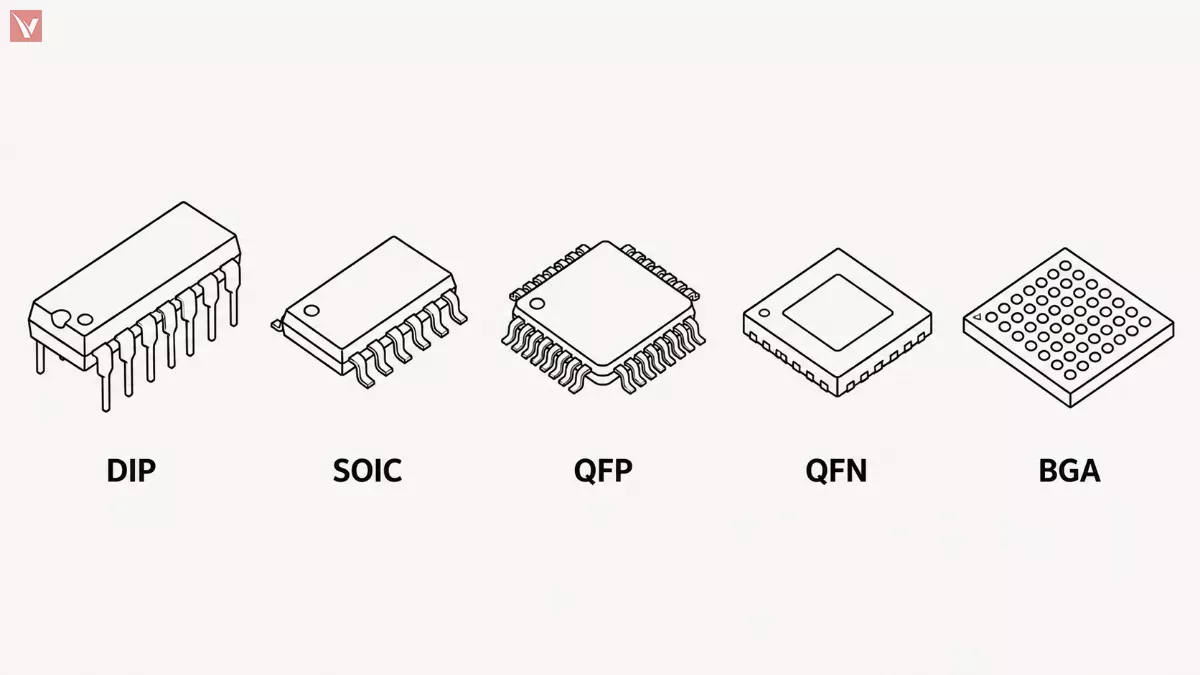
Surface Mount vs Through-Hole
IC packaging affects assembly, thermal performance, and application suitability.
- Surface Mount (SMD)
- Mounted directly onto PCB surface
- Smaller size, ideal for compact devices
- Examples: QFN, BGA, SOIC
- Through-Hole (DIP)
- Leads inserted through PCB holes
- Easier for prototyping and manual assembly
- Larger and less dense
How to Read an IC Datasheet
Understanding a datasheet is critical when selecting ICs. Key parameters include:
- Operating voltage range
- Current consumption
- Package type
- Pin configuration
- Thermal characteristics
- Timing diagrams (for digital ICs)
For instance, choosing a voltage regulator IC requires checking dropout voltage, maximum current, and thermal resistance to ensure compatibility with your system.
Sourcing Reliable ICs with Vigor Components
Selecting the right IC is not just about specifications—it also depends on supply chain reliability and authenticity.
Vigor Components, recognized as one of the global top electronic component distributors, provides:
- Access to a wide range of original ICs from leading manufacturers
- Strong supply chain capabilities for both standard and hard-to-find components
- Technical support for component selection and cross-referencing
- Quality assurance to mitigate counterfeit risks
For engineers and procurement teams, working with a trusted distributor ensures both performance reliability and project continuity—especially in volatile semiconductor markets.
Why Integrated Circuits Dominate Modern Technology
Integrated circuits have become indispensable due to their unmatched efficiency, scalability, and versatility.
Applications Across Major Industries
ICs are embedded across nearly every modern industry:
- Consumer Electronics: Smartphones, laptops, wearable devices
- Automotive: ADAS systems, EV power management, infotainment
- Industrial Automation: PLCs, motor drives, sensors
- Telecommunications: 5G infrastructure, RF modules
- Medical Devices: Imaging systems, implantable electronics
Their ability to integrate complex functionality into compact, reliable packages continues to drive innovation across sectors.