
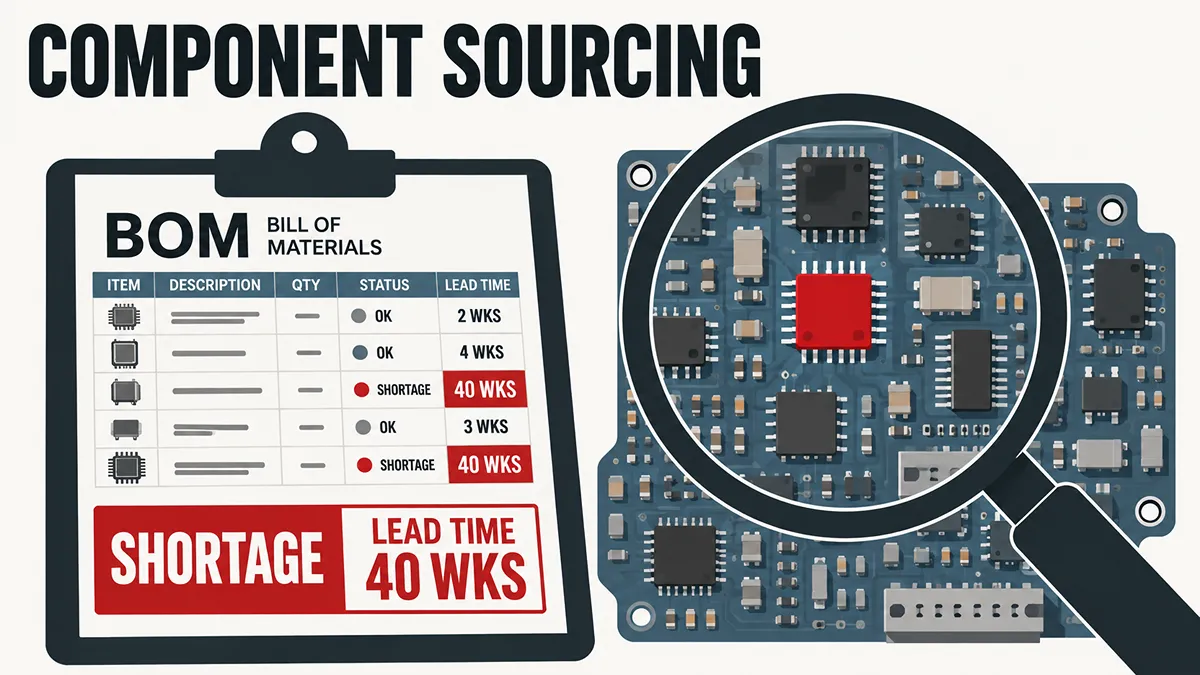
The electronic component supply chain remains highly volatile in 2026. While the broad, indiscriminate shortages of the early 2020s have subsided, procurement professionals now face a more targeted and stubborn challenge. Securing inventory for specific microcontrollers (MCUs), advanced memory, and specialized power ICs continues to disrupt manufacturing schedules across the globe.
Currently, 2026 semiconductor lead times for certain high-demand components are stretching to 40 weeks or more. This persistent scarcity forces buyers to look beyond their traditional franchised distribution networks. However, navigating the open market introduces significant risks regarding component authenticity, pricing volatility, and supplier reliability.
This guide provides a comprehensive overview of the macro shortage landscape in 2026 and delivers actionable sourcing strategies. Whether you are a novice buyer trying to locate immediate stock or a veteran procurement manager looking to evaluate independent distributor capabilities scientifically, these methodologies will help you secure hard-to-find electronic parts safely.
Why Electronic Parts Become Hard to Find
To effectively source constrained components, it is vital to understand the root causes of the current allocation environment. A structural shift in global semiconductor manufacturing primarily drives the 2026 supply chain dynamics.
Major silicon foundries are aggressively transitioning their capital expenditures and production capacity toward advanced nodes (sub-5nm processes). This shift is designed to support the explosive demand for artificial intelligence (AI) infrastructure, high-performance computing, and advanced consumer electronics. Consequently, mature process nodes (such as 40nm, 65nm, and older), which yield lower profit margins for foundries, are seeing a severe lack of investment.
Unfortunately, industrial, medical, automotive, and aerospace applications rely heavily on these exact mature-node components. As foundry capacity for older technologies shrinks or remains stagnant, any minor disruption—such as a facility power outage, raw material shortage, or geopolitical tension—immediately causes lead times to spike, turning standard components into hard-to-find commodities almost overnight.
High-Risk Component Categories
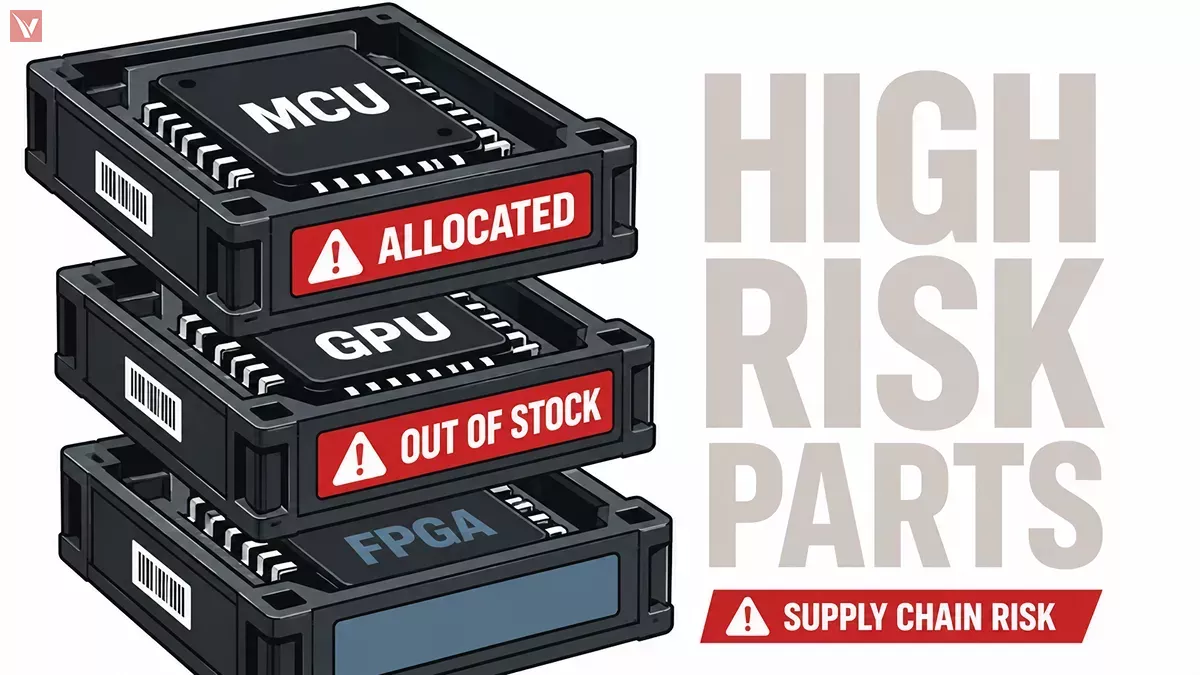
Not all electronic parts face the same level of scarcity. Identifying which components on your Bill of Materials (BOM) are at the highest risk allows you to proactively adjust your supply chain strategy. The following table highlights the most constrained component categories in the 2026 market landscape.
| Component Category | Typical 2026 Lead Time | Primary Cause of Shortage |
|---|---|---|
| Specific MCUs (Automotive/Industrial) | 30 40+ Weeks | Severe capacity constraints on mature node fab lines. |
| AI-Related Semiconductors (GPUs, High-Bandwidth Memory) | 35 50 Weeks | Unprecedented demand outpacing advanced packaging capacity. |
| High-Voltage Power ICs (SiC, GaN) | 25 35 Weeks | Rapid growth in electric vehicle (EV) and renewable energy infrastructure. |
| Legacy Field-Programmable Gate Arrays (FPGAs) | 20 30 Weeks | Manufacturers shifting focus to next-generation SoC FPGAs. |
Sourcing Strategies for Hard-to-Find Parts
When standard procurement channels fail, you must employ a multi-tiered sourcing strategy. The first step is to exhaust authorized distribution channels. Even if major distributors show zero stock online, contacting authorized representatives directly can sometimes uncover allocated inventory reserved for strategic accounts that has recently been released.
If franchised channels yield no results, leverage industry swap networks and OEM/EMS excess inventory. Many contract manufacturers hold surplus stock from canceled orders or over-forecasted production runs. Tapping into these networks can yield factory-sealed components at reasonable prices.
However, when factory stock and qualified open market inventory both fail to meet your production demands, the next logical step is to cross-reference replacement candidates. Finding a functional equivalent or drop-in replacement ensures that your assembly lines keep moving without relying on the unpredictable availability of a single constrained part.
Independent Distributors and Open-Market Suppliers
For components that cannot be substituted, the open market becomes the primary sourcing avenue. Independent distributors operate differently from franchised distributors; they source components globally from excess inventory, other brokers, and direct factory liquidations.
Evaluating an independent distributor's true sourcing capability requires moving beyond surface-level claims. A reliable partner will not just scrape database listings; they possess a proprietary, vetted network of global suppliers. Ask potential distribution partners about their vendor qualification process. How do they rate their suppliers? Do they track historical supplier performance regarding on-time delivery and defect rates?
Furthermore, you must determine the actual lifecycle status of the part you are searching for. If during your search you confirm that the component is already End-of-Life (EOL) or has entered a Not Recommended for New Designs (NRND) phase, the sourcing strategy changes from managing a temporary shortage to managing obsolescence. In this scenario, you should consult a comprehensive guide on managing obsolete electronic parts to systematically plan a last-time buy or initiate a board redesign.
Counterfeit Risk and Traceability
The biggest threat when sourcing hard-to-find electronic parts on the open market is the proliferation of counterfeit components. When demand vastly exceeds supply, bad actors exploit the market by remarking older chips, pulling used parts from discarded electronics, or fabricating fake packaging.
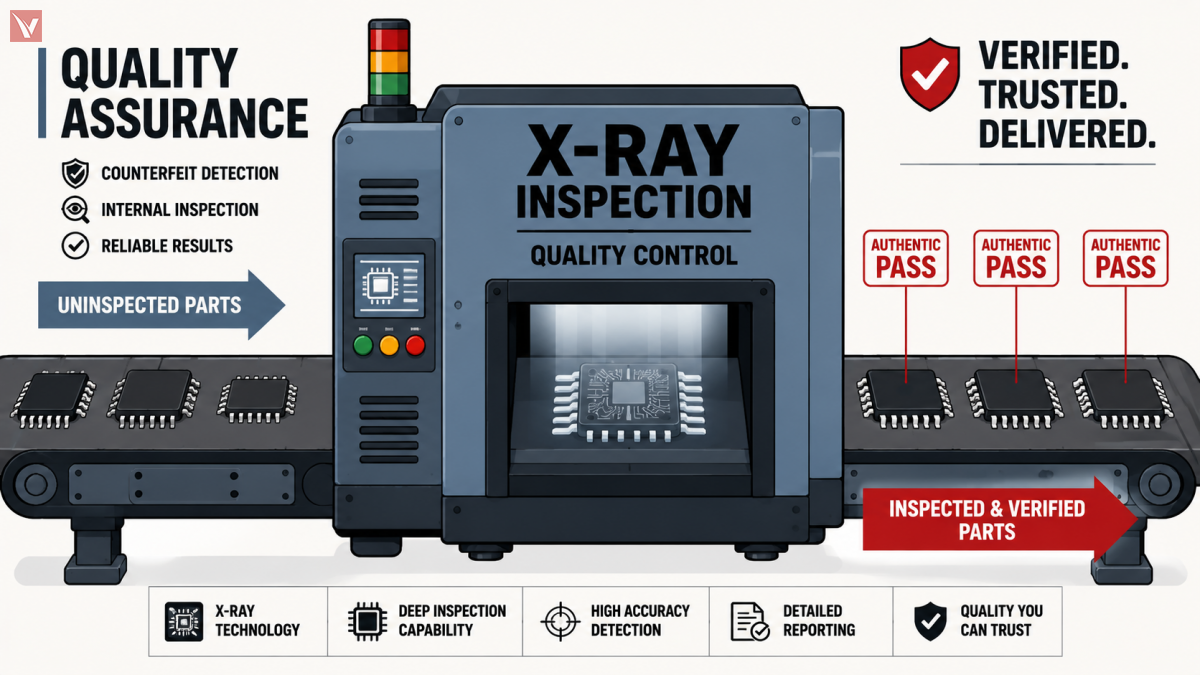
To mitigate this, stringent quality control is mandatory. Reputable independent distributors, such as Vigor Components, operate robust in-house quality assurance systems that align with global aerospace and defense standards. A comprehensive inspection protocol should include:
- Detailed Visual Inspection: Utilizing high-resolution microscopy to check for resurfacing, blacktopping, bent leads, and inconsistencies in manufacturer logos and typestyles.
- X-Ray Analysis: Verifying the internal die structure, wire bonding, and lead frame consistency against a known good part or authentic manufacturer database.
- Chemical Decapsulation: Utilizing acid etching to dissolve the epoxy casing and visually verify the original manufacturer's die markings and proprietary architecture.
- Electrical Testing: Performing curve trace analysis or full-function electrical testing across various temperature ranges to ensure the component meets datasheet specifications.
By relying on distributors who prioritize physical testing and full traceability over quick transactions, you significantly reduce the risk of introducing substandard components into your manufacturing process.
Information to Request Before Buying
Securing stock is only half the battle; ensuring the inventory meets your manufacturing requirements is equally important. When issuing a Request for Quote (RFQ) to an independent distributor for a hard-to-find part, you must dictate your specific requirements upfront.
Failing to request detailed information before issuing a Purchase Order (PO) can result in receiving parts that are technically authentic but practically unusable for your assembly line. Always request the following details:
- Date Codes: Understand the age of the components. Older date codes (typically over 2-3 years) may have degraded solderability and require baking prior to reflow.
- Packaging Type: Specify if you need the parts in Tape & Reel (T&R), Tubes, or Trays. If parts arrive in bulk packaging but your pick-and-place machines require T&R, you will face manufacturing delays.
- Moisture Sensitivity Level (MSL): Ensure the parts have been stored properly in vacuum-sealed bags with desiccants and humidity indicator cards.
- Traceability Documentation: Demand a Certificate of Conformance (CoC) and inquire if full supply chain traceability back to the original component manufacturer is available.
Frequently Asked Questions
What should an RFQ include for a hard-to-find component?
A comprehensive RFQ should include the exact manufacturer part number (including all suffix variations for packaging and temperature grades), the target quantity, your required delivery date, acceptable date code ranges, and required packaging (e.g., Tape & Reel). Additionally, state your testing and traceability requirements upfront to filter out brokers who cannot meet your quality standards.
Is a certificate of conformance enough to verify hard-to-find parts?
No. While a Certificate of Conformance (CoC) is a standard document indicating that the supplier guarantees the parts meet specifications, it is easily forged on the open market. A CoC must be backed by physical traceability documentation or comprehensive third-party testing (visual, X-ray, electrical) to truly verify the authenticity of high-risk, hard-to-find components.
When should X-Ray, electrical testing, or decapsulation be requested?
These advanced tests should be mandatory when sourcing highly constrained, expensive components (like MCUs or FPGAs) from unknown or unverified open-market vendors. They are also crucial if the components have older date codes, lack unbroken traceability back to the factory, or if the parts are intended for mission-critical applications such as medical devices or automotive systems.
How can buyers assess date-code mixing within one shipment?
Buyers must explicitly request that the supplier provides a breakdown of all date codes present in the shipment prior to shipping. Upon receiving the components, incoming inspection teams should verify the labels on the reels, tubes, or trays against the physical markings on the chips themselves to ensure consistency and identify any unauthorized lot mixing.
What should happen if received parts fail inspection or traceability review?
If components fail visual inspection, testing, or lack the promised documentation, they should immediately be quarantined in a secure area to prevent them from entering the production floor. The buyer should initiate a Return Material Authorization (RMA) with the supplier immediately, providing detailed photographic evidence and testing reports as proof of the failure.
References
1. Rand Technology: Why Mature-Node Capacity Is Becoming a Supply Chain Challenge - Market insights detailing how the shift toward advanced nodes is causing structural capacity constraints for mature-node components.
2. Supply Chain Intelligence: 2026 Component Lead Times - Market data tracking manufacturer price increases and specific semiconductor lead times extending beyond 40 to 52 weeks.
3. SAE International: AS6081 Quality Assurance Standards - Guidelines dictating mandatory counterfeit mitigation testing (such as High-Magnification Visual Inspection, X-Ray, and Decapsulation) for hard-to-find components sourced on the open market.