
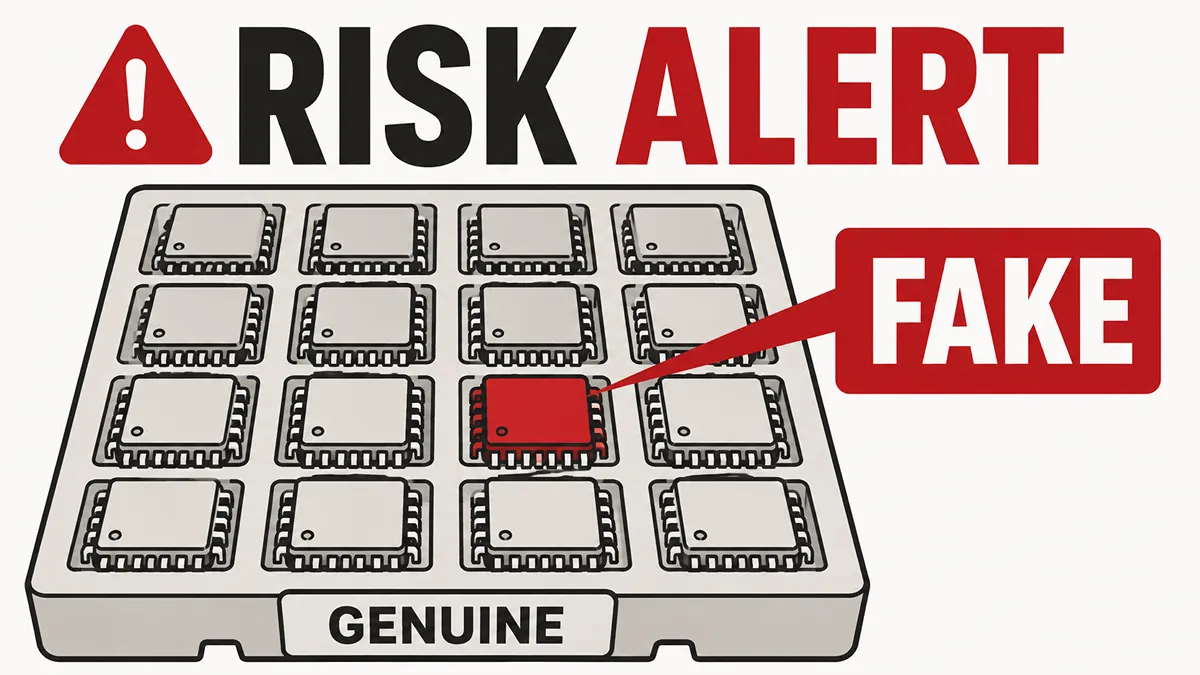
The global semiconductor supply chain is increasingly vulnerable to sophisticated fraud. As factory lead times fluctuate and end-of-life (EOL) components become harder to source, original equipment manufacturers (OEMs) and electronics manufacturing services (EMS) are often forced into the open market. This necessity opens the door for malicious actors. Navigating this landscape requires robust engineering knowledge, stringent quality assurance protocols, and a deep understanding of component forensic analysis.
The Hidden Risks of Counterfeit Electronic Components
When substandard or fabricated components end up in mission-critical applications—such as aerospace flight controls, automotive advanced driver-assistance systems (ADAS), or life-sustaining medical devices—the result can be catastrophic system failure. The official SAE AS5553 standard explicitly categorizes these threats as severe performance, reliability, and safety risks.
Do you know? Beyond immediate hardware failures, the introduction of unauthorized parts exposes organizations to massive product recall costs, irreversible brand damage, and even potential cybersecurity vulnerabilities if malicious hardware Trojans are embedded in the forged silicon.
Main Types of Counterfeit Electronic Components
To effectively combat fraudulent components, quality assurance teams must first understand exactly what they are looking for. The industry generally classifies counterfeit parts into several distinct categories based on their origin and the nature of the deception:
- Recycled and Remarked Parts: The most widespread type of fraud. Scavengers harvest used components from discarded e-waste, chemically or mechanically clean them up, resurface the package, and print new date codes or higher-grade part numbers to masquerade them as pristine stock.
- Cloned Parts: Unauthorized manufacturers reverse-engineer the die or the package and produce a functional but highly inferior copy, entirely bypassing original component manufacturer (OCM) quality controls and environmental testing.
- Out-of-Specification Parts: These are genuine semiconductor dies that failed the OCM's final test yield. Instead of being destroyed, they are illicitly diverted through grey markets and falsely labeled as passing commercial, industrial, or military grades.
- Empty Packages: In times of severe market shortage, fraudsters will ship reels of components where the plastic or ceramic package is completely hollow—containing no active die and no wire bonds inside.
- Forged Documentation: Authentic-looking, physically passable components accompanied by fabricated Certificates of Conformity (CoC) or manipulated trace documentation designed to bypass basic supply chain checks.
Common Physical Alterations in Counterfeit Parts
Fraudsters utilize several mechanical and chemical techniques to disguise recycled or inferior parts.
| Alteration Method | Mechanism of Forgery | Inspector Red Flags |
|---|---|---|
| Blacktopping | Sanding down the original epoxy surface to remove old markings, then applying a proprietary polymer coating to create a fresh, blank canvas for new silk-screening. | Inconsistent surface reflectivity, loss of original mold cavities, or a smooth texture that differs from the OCM's standard matte finish. |
| Re-marking | Using laser etching or ink printing to apply fake date codes, higher speed grades, or entirely different part numbers onto the black-topped surface. | Spelling errors, incorrect font styles, laser burn marks extending into the mold dimples, or ink that easily wipes away. |
| Re-tinning & Re-balling | Applying new solder to oxidized leads or re-attaching solder balls to BGA (Ball Grid Array) packages salvaged from old PCB boards. | Uneven solder thickness, bent pins, residual flux under the microscope, or poor coplanarity across the component leads. |
Step1: Essential Visual Inspection Techniques for Immediate Detection
The first line of defense is a rigorous visual and physical examination, often guided by established protocols like the IDEA-STD-1010 standard. This initial screening can catch a significant percentage of fraudulent parts before they ever reach the PCB assembly line.
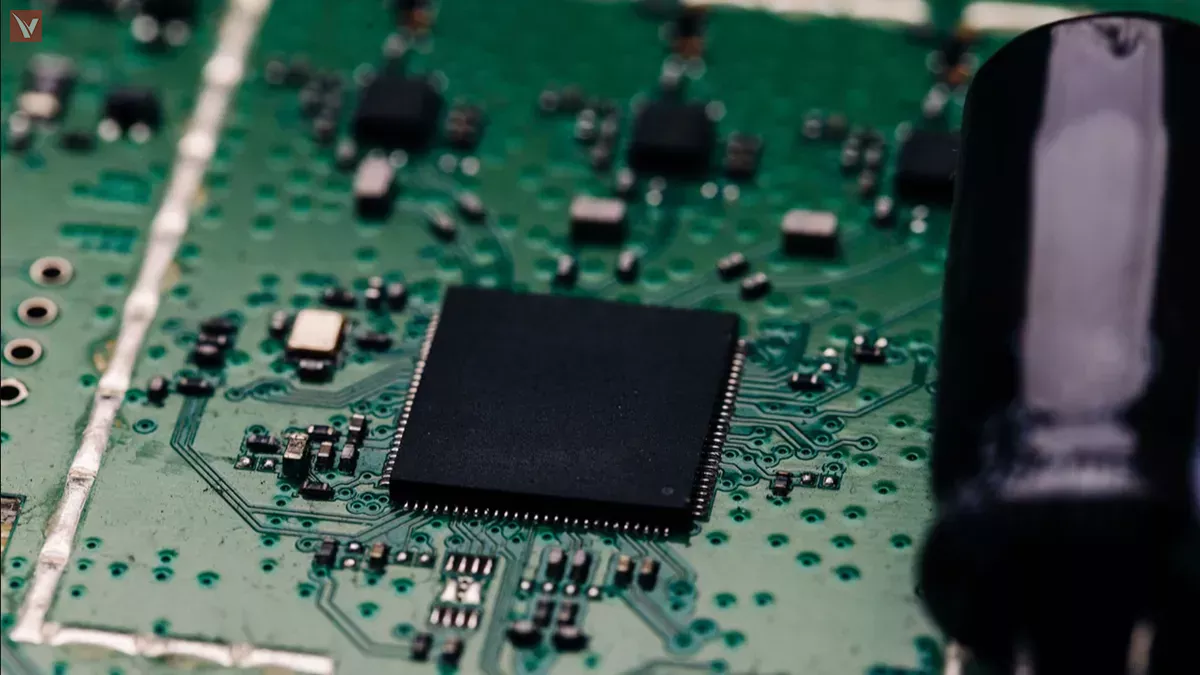
Inspectors must begin with a high-magnification optical microscope, focusing intently on the component's topographical features. Are the mold marks (such as ejector pin indents) uniform and consistent with known good parts? Counterfeiters often inadvertently fill these indents during the blacktopping process, leaving shallow or distorted dimples.
The solvent wipe test remains a highly effective, low-cost detection method. By applying a mixture of mineral spirits and alcohol—or pure acetone—to a cotton swab and firmly rubbing the component surface, inspectors can quickly expose blacktopping. Genuine epoxy molding compounds are chemically inert and will not react to acetone. If the swab turns black or the surface coating begins to dissolve and smear, the part is undeniably counterfeit. Additionally, checking for oxidation on the leads, searching for micro-scratches, and verifying that the date code logically matches the manufacturer's actual production timeline are mandatory steps in immediate detection.
Step2: Advanced Laboratory Testing to Verify Electronic Components' Authenticity
When visual inspection is inconclusive, or when dealing with high-value, mission-critical components, engineering teams must escalate to advanced analytical and destructive methods to guarantee part integrity.
Radiographic (X-Ray) Inspection
Non-destructive X-ray imaging allows technicians to peer inside the packaging without altering the component. By comparing the X-ray footprint of a suspect part against a known golden sample, engineers can instantly spot discrepancies. Counterfeiters often mix parts from different batches into a single reel; under an X-ray, this manifests as varying die sizes, different lead frame structures, or entirely missing wire bonds.
Acoustic Microscopy (C-SAM)
Scanning Acoustic Microscopy is utilized to detect internal delamination, voids, or micro-cracks. When parts are salvaged from old boards using high heat, the thermal stress often causes the epoxy to separate from the lead frame or the die surface. This mechanical degradation is entirely invisible to optical and X-ray inspections but is clearly highlighted by C-SAM imaging.
Decapsulation (Destructive Testing)
For definitive proof of components' authenticity, decapsulation involves using highly corrosive chemicals (typically fuming nitric or sulfuric acid) to carve away the plastic encapsulation, exposing the bare silicon die. Under a high-power metallurgical microscope, engineers can verify the manufacturer's proprietary logo, the specific die revision number, and the actual topography of the integrated circuit. If the silicon die logo reads "Texas Instruments," but the external package is branded "Analog Devices," the fraud is instantly exposed.
Electrical Pin-to-Pin I-V Curve Tracing
Electronic components' authenticity isn't just physical; it's heavily electrical. Curve tracers apply a voltage sweep to the component pins and measure the resulting current, plotting a detailed I-V signature. Because every semiconductor junction has a unique electrical characteristic based on its doping and architecture, comparing the I-V curve of a suspect part against the OCM's official datasheet or a verified golden sample provides immediate verification of the part's internal electrical integrity.
Proven Supply Chain Strategies to Avoid Counterfeits
While robust detection capabilities are essential, the most effective defense mechanism is a proactive supply chain strategy focused on pure avoidance. Preventing fake parts from entering the procurement stream altogether saves immense time, capital, and liability.
To build a resilient electronic component procurement framework, organizations must adopt proactive supplier vetting and quality assurance strategies before the purchase order is ever issued:
- Implement Industry Standards: Adopt stringent compliance frameworks such as SAE AS6081, which standardizes practices for independent distributors to identify reliable sources, assess risk, and mitigate the distribution of fraudulent parts.
- Rigorous Vendor Qualification: Never buy on the open market blindly. Establish a closed-loop Approved Vendor List (AVL). Require distributors to provide comprehensive quality manuals, facility audit reports, and definitive proof of their in-house inspection capabilities.
- Demand Full Traceability: Whenever possible, procure materials with a clear, unbroken chain of custody back to the Original Component Manufacturer, accompanied by authentic, verifiable Certificates of Conformity.
- Monitor Counterfeit Databases: Utilize trusted intelligence networks like the ERAI Counterfeit Parts Database or the Government-Industry Data Exchange Program (GIDEP) to track known fraudulent suppliers, recent counterfeit sightings, and specific high-risk part numbers.
Partnering with a Reliable Independent Components Distributor
Navigating global supply chain disruptions, EOL component obsolescence, and extended factory lead times often requires venturing beyond traditional franchise channels. During these critical shortages, partnering with a strictly vetted independent distributor is the ultimate safeguard against counterfeit infiltration.
Vigor Components: Singapore Headquarters and Global Reach
As a premier global independent electronic components distributor headquartered in Singapore, Vigor Components leverages the region's world-class logistics infrastructure and strict legal compliance environment to serve high-reliability clients worldwide. We act as your secure bridge to the global open market, ensuring that supply chain agility never comes at the expense of component authenticity.
Contact US
Our Rigorous 4-Step Quality Inspection Process
To guarantee that zero counterfeit parts reach your assembly lines, Vigor Components executes an unyielding, data-driven inspection protocol on every incoming shipment:
- Packaging and Document: Our inbound logistics team meticulously verifies the integrity of the external packaging. We validate Moisture Sensitivity Level (MSL) vacuum seals, anti-static shielding, factory barcode labeling, and cross-reference date codes against real-time OCM traceability databases.
- Label & Visual Inspection: Utilizing high-resolution digital microscopy, our IDEA-STD-1010 trained inspectors scrutinize the component topography. We check for telltale signs of blacktopping, examine the coplanarity of pins, assess oxidation levels, and perform standardized solvent wipe tests to ensure surface legitimacy.
- Advanced Testing: Beyond the surface, we employ non-destructive X-Ray imaging to map the internal wire bonding and die frame alignment. This is coupled with pin-to-pin I-V curve electrical testing to guarantee the semiconductor junctions match the official datasheet parameters perfectly.
- Third-Party Laboratories: For ultra-high-risk allocations or stringent aerospace and medical requirements, we partner exclusively with ISO/AS5553 certified third-party testing laboratories. These facilities conduct destructive decapsulation, X-Ray Fluorescence (XRF) material composition analysis, and advanced solderability testing, providing you with absolute, scientific certainty of authenticity.
References
- SAE International. (2025). AS5553E: Counterfeit Electrical, Electronic, and Electromechanical (EEE) Parts; Avoidance, Detection, Mitigation, and Disposition.
- SAE International. (2023). AS6081A: Counterfeit Electrical, Electronic, and Electromechanical (EEE) Parts: Avoidance, Detection, Mitigation, and Disposition Independent Distribution.
- Independent Distributors of Electronics Association. IDEA-STD-1010: Acceptability of Electronic Components Distributed in the Open Market. ERAI Glossary Reference.
- ERAI Inc. Global Information Services for Electronic Supply Chain Professionals.