
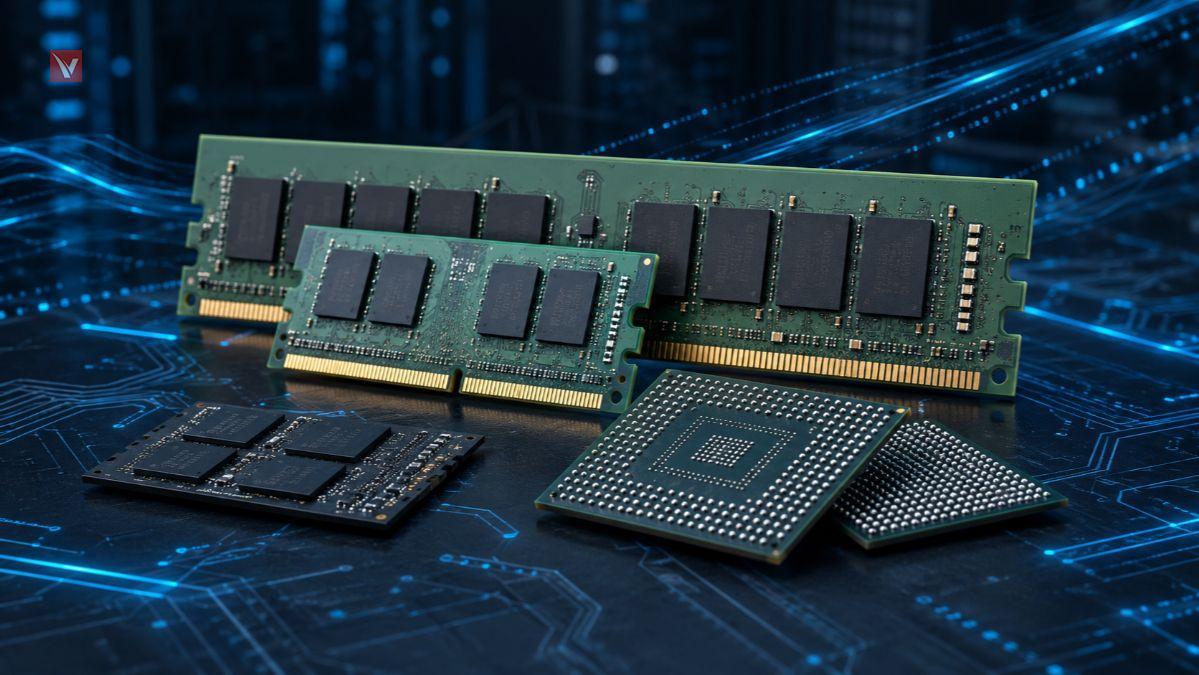
Random Access Memory (RAM) plays a foundational role in modern electronics—from consumer devices to high-reliability industrial systems. Yet with so many different types of RAMs available, engineers and procurement teams often face challenges in selecting the most suitable option for performance, cost, and application requirements.
Understanding Random Access Memory Fundamentals
RAM (Random Access Memory) is a type of volatile memory used by systems to store data temporarily while actively in use. Unlike non-volatile storage such as SSDs or flash memory, RAM loses its data when power is removed.
It serves as the system’s primary working memory, enabling fast read and write access for the CPU. The performance of RAM directly impacts system speed, multitasking capability, and overall efficiency.
Key characteristics of RAM include:
-
Volatility: Data is not retained without power
-
High speed: Much faster than secondary storage
-
Random access: Any memory location can be accessed directly
-
Temporary storage: Used for active processes and computations
Understanding this baseline is essential before diving into the different types of memory RAM and how they vary in structure and use cases.
Main Categories and Classifications of RAM
-
Static RAM (SRAM)
-
Dynamic RAM (DRAM)
Beyond these, several specialized and derivative types exist for specific applications such as industrial systems, enterprise servers, and embedded devices.
Below is a simplified classification overview:
| Category | Subtypes | Key Features | Typical Applications |
|---|---|---|---|
| SRAM | Asynchronous SRAM, Synchronous SRAM | Ultra-fast, no refresh needed, expensive | CPU cache (L1/L2/L3) |
| DRAM | SDRAM, DDR3, DDR4, DDR5 | High density, lower cost, requires refresh | System memory, PCs, servers |
| Specialized RAM | ECC RAM, NVRAM, PSRAM | Error correction, persistence, hybrid designs | Industrial, automotive, enterprise |
This classification helps frame the landscape before diving deeper into each type’s architecture and trade-offs.
For a detailed technical comparison of these primary architectures, evaluate the specific differences between SRAM vs DRAM.
Static RAM Architecture and Operational Benefits
Static RAM (SRAM) is built using bistable latching circuitry—typically a 6-transistor flip-flop per memory cell. Unlike DRAM, SRAM does not require periodic refreshing to maintain data.
Why SRAM Is So Fast
-
Data is stored in stable transistor states
-
No refresh cycles interrupt access
-
Extremely low latency
Trade-offs
-
Larger cell size → lower density
-
Higher manufacturing cost
-
Greater power consumption per bit
Real-World Applications
-
CPU caches (L1, L2, L3)
-
High-speed buffers
-
Networking equipment
Example: A processor accessing L1 cache (SRAM) can retrieve data in a few CPU cycles, compared to tens or hundreds of cycles for DRAM.
Dynamic RAM and the DDR Evolution
Core Characteristics of DRAM
-
High density (more memory per chip)
-
Lower cost compared to SRAM
-
Slower access due to refresh cycles
From SDRAM to DDR5
Modern systems use synchronous DRAM (SDRAM), which synchronizes with the system clock. This evolved into Double Data Rate (DDR) memory, where data is transferred on both clock edges.
Below is a generational comparison:
| Type | Data Rate | Voltage | Key Improvement |
|---|---|---|---|
| DDR3 | 800–2133 MT/s | 1.5V | Lower power vs DDR2 |
| DDR4 | 1600–3200 MT/s | 1.2V | Higher bandwidth, better efficiency |
| DDR5 | 4800–8400+ MT/s | 1.1V | Improved scalability, on-die ECC |
Why DDR Matters in Selection
For engineers choosing between different types of memory RAM:
- DDR4 remains cost-effective and widely compatible
- DDR5 offers higher performance but at a higher price
- System architecture must support the selected generation
For a comprehensive evaluation of these parameters, reviewing the differences between DDR4 and DDR5 can guide specific hardware configurations.
Specialized Industrial Memory and Enterprise Solutions
ECC RAM (Error-Correcting Code)
ECC RAM detects and corrects single-bit memory errors, making it essential for:
- Servers and data centers
- Mission-critical systems
Financial and medical infrastructure
NVRAM (Non-Volatile RAM)
Unlike traditional RAM, NVRAM retains data even when power is lost.
Common types include:
- MRAM
- FRAM
- Battery-backed SRAM
Use cases:
- Industrial automation
- Data logging systems
Embedded controllers
PSRAM (Pseudo-Static RAM)
PSRAM combines DRAM density with SRAM-like interface simplicity.
Advantages:
- Lower pin count
- Simplified memory controller design
- Cost-effective for embedded systems
These specialized options expand the scope of different types of RAMs beyond traditional computing and into industrial-grade applications.
Practical Sourcing Strategies for Memory Components
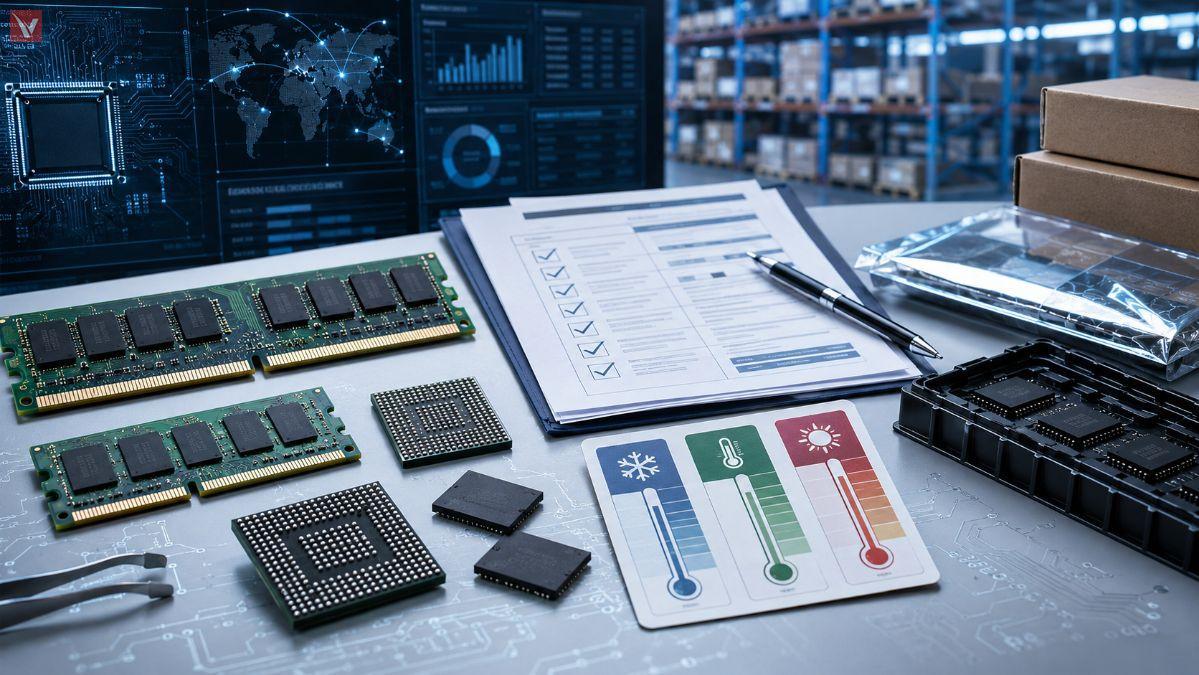
-
Package Type
-
DIMM: Standard modules for desktops and servers
-
SO-DIMM: Compact modules for laptops and embedded systems
-
BGA: Chip-level packaging for PCB integration
-
Part Number (MPN) Verification
-
Manufacturer consistency (Micron, Samsung, SK hynix)
-
Speed grade and timing
-
Lifecycle status (active vs obsolete)
-
Temperature Grades
-
Commercial: 0∘C0∘C to 70∘C70∘C
-
Industrial: −40∘C−40∘C to 85∘C85∘C
-
Automotive: up to 125∘C125∘C
-
Supply Chain Reliability
-
Source from authorized or vetted distributors
-
Check for counterfeit risks
-
Evaluate long-term availability
-
Application-Based Selection
-
High-speed computing → SRAM + DDR5
-
Cost-sensitive systems → DDR4 DRAM
-
Industrial control → ECC + NVRAM