
Are All Lithium Batteries Rechargeable?
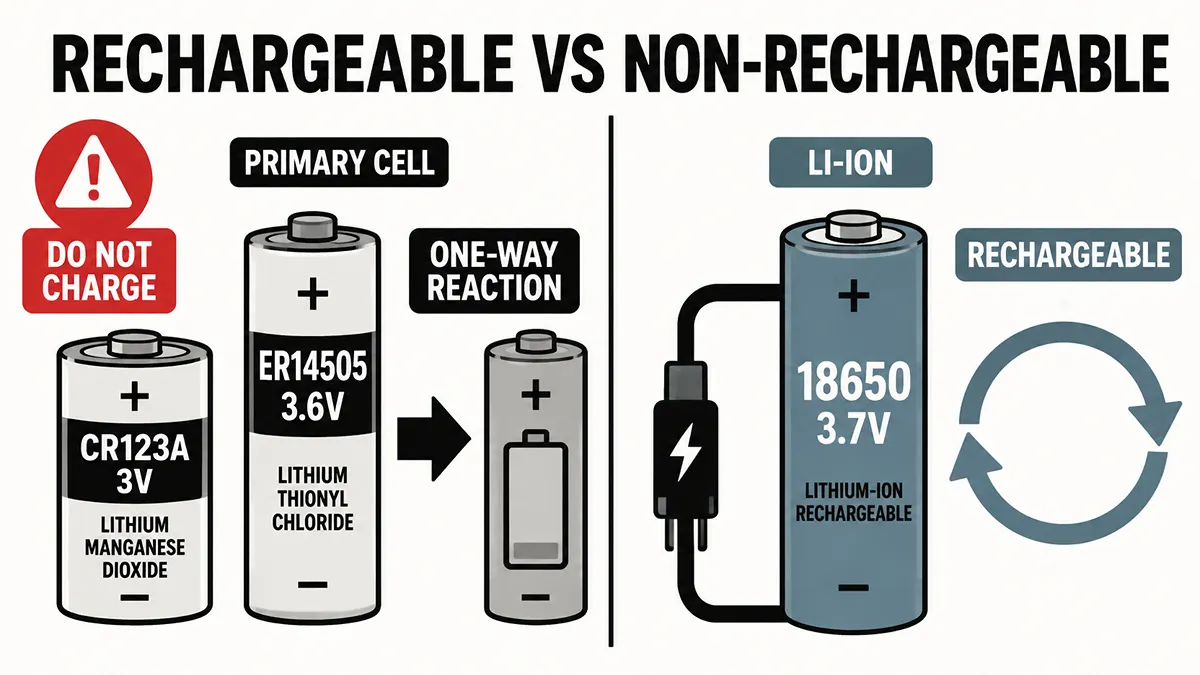
No. The term "lithium battery" functions as a broad taxonomy encompassing two strictly distinct classifications defined by their internal electrochemistry: primary (non-rechargeable) and secondary (rechargeable) cells. The fundamental technical divergence lies in the reversibility of their respective redox reactions.
Secondary lithium cells operate on a reversible electrochemical framework. When an external charging voltage is applied, the chemical reaction reverses, allowing the battery to replenish its stored potential energy. Conversely, primary lithium cells operate on an irreversible reaction. During discharge, the active materials within the anode and cathode are permanently structurally altered to generate electrical current. Once the reactive materials are depleted, the cell's lifespan permanently concludes. Attempting to force a reverse current into a primary cell does not reconstitute the chemical structure; instead, it introduces severe physical and chemical hazards, including electrolyte boiling and thermal venting.
Chemistry of Rechargeable and Non-Rechargeable Types
Understanding the functional boundaries of these components requires examining the specific chemical mechanics at the atomic level.
Primary (Non-Rechargeable) Chemistry: Irreversible Consumption
Primary lithium batteries, such as Lithium Thionyl Chloride (Li-SOCl₂) and Lithium Manganese Dioxide (Li-MnO₂), utilize a metallic lithium anode. In a Li-SOCl₂ cell, the discharging process involves the oxidation of lithium metal and the reduction of liquid thionyl chloride at a porous carbon cathode. This reaction produces solid lithium chloride (LiCl) and sulfur dioxide (SO₂).
The formation of these reaction products permanently alters the chemical composition of the cell. The solid LiCl precipitates and forms a passivation layer on the lithium anode. While this layer is highly beneficial for preventing self-discharge during extended storage, the overall chemical transformation cannot be safely driven backward by applying a reverse current. The original metallic lithium and liquid thionyl chloride cannot be reconstituted, making the discharge a one-way process.
Secondary (Rechargeable) Chemistry: Intercalation Dynamics
Rechargeable variants, primarily Lithium-ion (Li-ion) and Lithium Polymer (LiPo), generally avoid using pure metallic lithium due to the high risk of dendrite formation during the recharging phase. Instead, they rely on a structural principle called intercalation.
In these secondary cells, lithium ions \(Li^+\) travel back and forth between a graphite anode and a metal oxide cathode (such as \(LiCoO_2\) or \(LiFePO_4\)) through a liquid or polymer electrolyte. During discharge, lithium ions extract themselves from the graphite lattice and intercalate—or insert themselves—into the cathode's lattice structure. When a charging voltage is applied, the process reverses: ions move from the cathode back into the graphite anode. Because this mechanism involves the physical migration of ions into existing atomic spaces rather than the complete consumption and restructuring of the core materials, the cycle can be reliably repeated for hundreds or thousands of iterations.
Comparing Voltage Capacity and Cycle Life
For hardware design, selecting the correct cell requires looking past generic top-line specifications and analyzing how these distinct chemistries behave under operational stress. Below is a structural comparison of standard primary (3V/3.6V) and secondary (3.7V) lithium configurations.
| Parameter | Primary: Li-MnO₂ (3V) / Li-SOCl₂ (3.6V) | Secondary: Li-ion / LiPo (3.7V) |
|---|---|---|
| Energy Density | Extremely High (Up to 700 Wh/kg for Li-SOCl₂) | Moderate to High (150 270 Wh/kg) |
| Internal Resistance (ESR) | High (Due to anode passivation layer) | Low (Supports high pulse/continuous drain) |
| Cycle Life | 0 (Single use, irreversible) | 500 to 2000+ cycles |
| Self-Discharge Rate | < 1% to 2% per year | 2% to 5% per month |
| Performance at -40°C | Excellent (Stable voltage retention) | Poor (Electrolyte viscosity increases, capacity drops) |
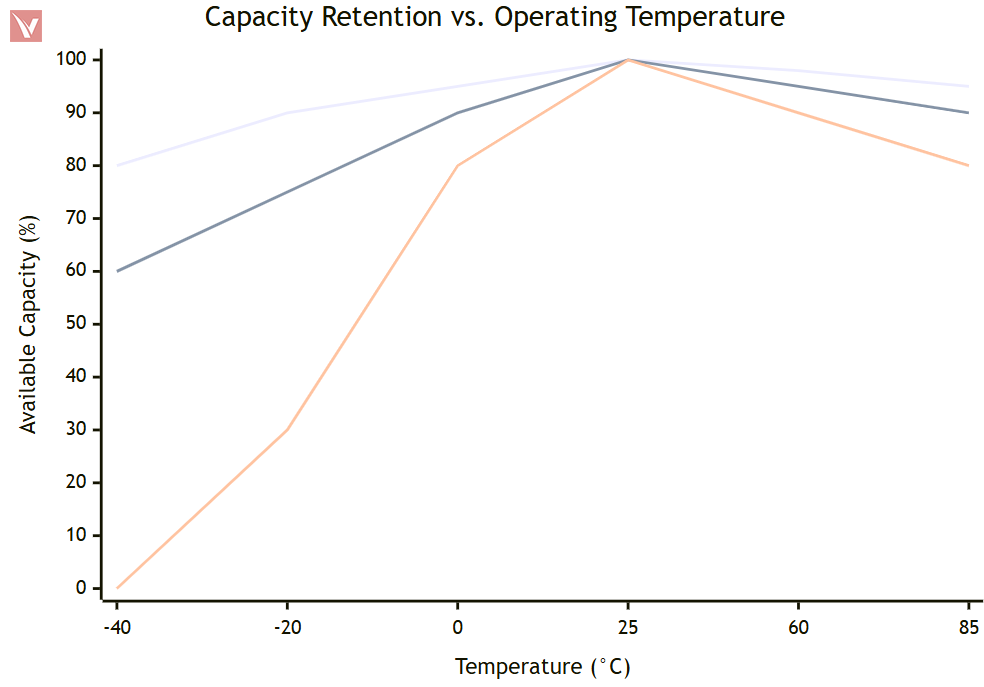
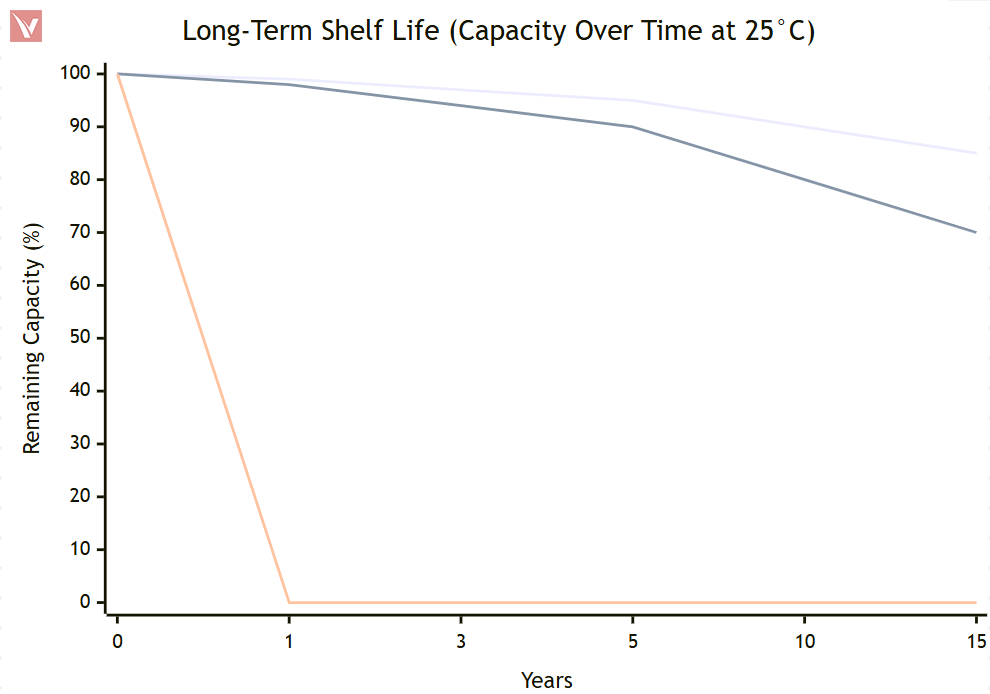
When evaluating these parameters for PCB integration, several critical engineering differences emerge:
- Energy Density vs. Power Delivery: A 3.6V Li-SOCl₂ cell maximizes volumetric energy density (often exceeding 700 Wh/kg), making it highly effective for long-term deployment where spatial footprint is limited but power draw is negligible. However, its high internal resistance restricts its ability to deliver sudden, high-current pulses without significant voltage droop.
- Temperature Resilience: At -40°C, a standard Li-ion cell experiences severe capacity degradation because ions move sluggishly through cold, viscous electrolyte. In contrast, Bobbin-type Li-SOCl₂ cells maintain internal stability and continue to operate reliably in extreme environmental cold.
- Self-Discharge Rates: Primary cells exhibit a self-discharge rate of less than 1-2% per year due to the anode passivation layer, allowing for shelf lives exceeding a decade. Secondary cells typically lose 2-5% of their charge per month, strictly requiring active battery management systems (BMS) or periodic recharging schedules.
Hardware Applications in Security Cameras and IoT
The physical and chemical differences between these battery types dictate their respective positions on a hardware Bill of Materials (BOM). In the security and Internet of Things (IoT) sectors, power architecture varies drastically depending on the device's operational duty cycle.
- Long-Standby Offline Sensors (Primary Cells): Devices such as perimeter breach detectors, magnetic door contacts, and passive infrared (PIR) motion sensors operate on microampere sleep currents. They wake up rarely, transmit a brief data packet, and return to sleep. For these applications, hardware engineers specify primary lithium cells like the CR123A (Li-MnO₂) or ER14505 (Li-SOCl₂). The ultra-low self-discharge rate matches the sensor's low-drain profile, enabling a maintenance-free lifespan of 5 to 10 years.
When sourcing components for these critical deployments, evaluating the best CR123A battery brands ensures maximum uptime and prevents premature system failure.
- Solar-Powered Wireless Cameras (Secondary Cells): Active surveillance units require heavy processing to encode video streams, trigger high-power IR LED arrays, and transmit high-bandwidth data via Wi-Fi or cellular modems. These activities demand high continuous current and sudden power bursts. Combined with integrated solar panels for daily energy harvesting, this architecture strictly requires secondary Li-ion (e.g., 18650 or 21700 formats) or LiFePO4 battery packs capable of accepting frequent charge cycles and delivering low-impedance power on demand.
For specific End-of-Life (EOL) primary batteries or high-drain rechargeable cells used in these security camera designs, hardware teams often rely on global distributors like Vigorcomp to secure Form-Fit-Function replacements and maintain supply chain stability across production runs.
Looking for the right battery components for your next hardware design?
As an independent global electronic components distributor, Vigorcomp helps manufacturers source hard-to-find primary and secondary lithium cells, manage EOL transitions, and secure your BOM. Contact our experts to match the exact components for your production lines.
Contact US
Frequently Asked Questions
Can I recharge lithium AA batteries?
No, standard 1.5V Lithium Iron Disulfide (Li-FeS₂) AA batteries are primary cells and will become hazardous if charged. However, modern rechargeable 1.5V AA batteries exist; these are actually 3.7V Li-ion cells utilizing an internal buck converter to output 1.5V. (See our 1.5V Battery Guide for detailed identification).
What happens if a primary lithium battery is charged?
Applying reverse current to a primary cell generates severe internal heat, vaporizing the electrolyte and causing lithium to plate on the anode. This rapid pressure buildup leads to thermal runaway, requiring PCB designs to include reverse-blocking diodes for protection.
Why do modern IoT devices still use primary batteries?
It comes down to Total Cost of Ownership (TCO). In massive remote deployments, the labor cost to replace a depleted battery far exceeds the component cost. The 10-20 year lifespan and near-zero self-discharge of a Li-SOCl₂ cell remain unmatched by current rechargeable technologies.
Do shipping regulations differ for primary and secondary cells?
Yes. Under the UN38.3 standard, primary lithium metal batteries (UN3090) face stricter air transport restrictions due to the volatility of metallic lithium, whereas secondary lithium-ion batteries (UN3480) have different compliance categories focused heavily on their specific State of Charge (SoC).