
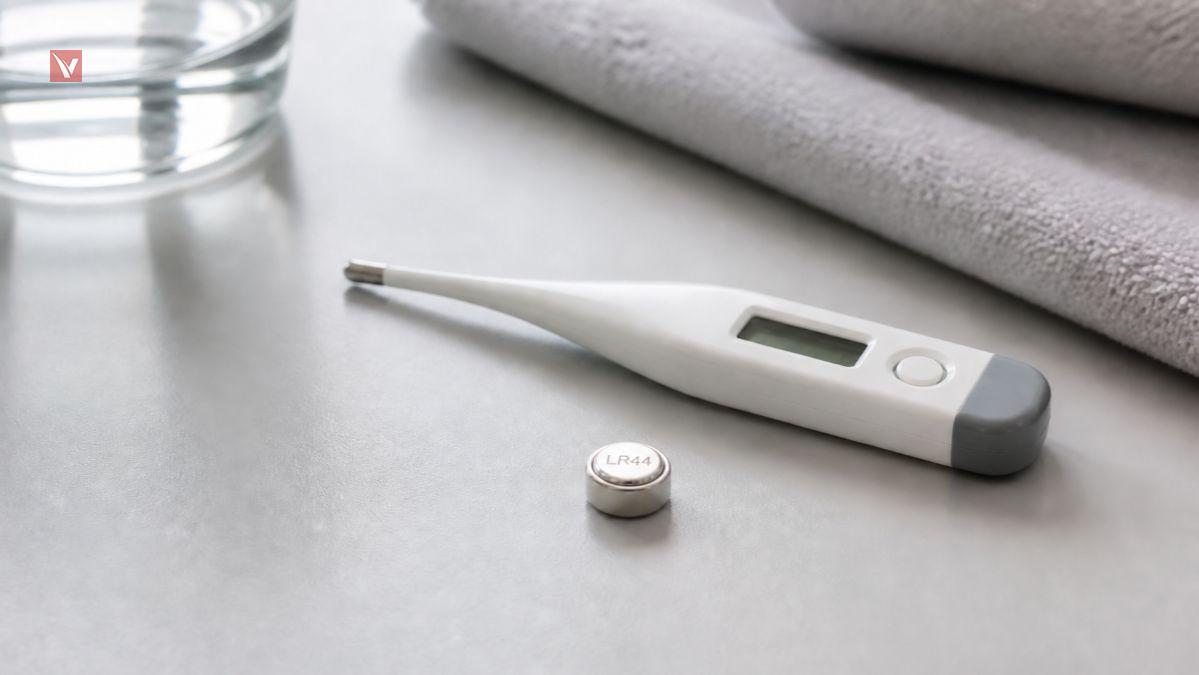
Button cell batteries like SR44 and LR44 are widely used across consumer electronics, industrial tools, and precision instruments. Despite their identical physical dimensions, their chemical composition and electrical performance differ significantly—making the wrong choice costly in sensitive applications.
Technical Overview of SR44 and LR44
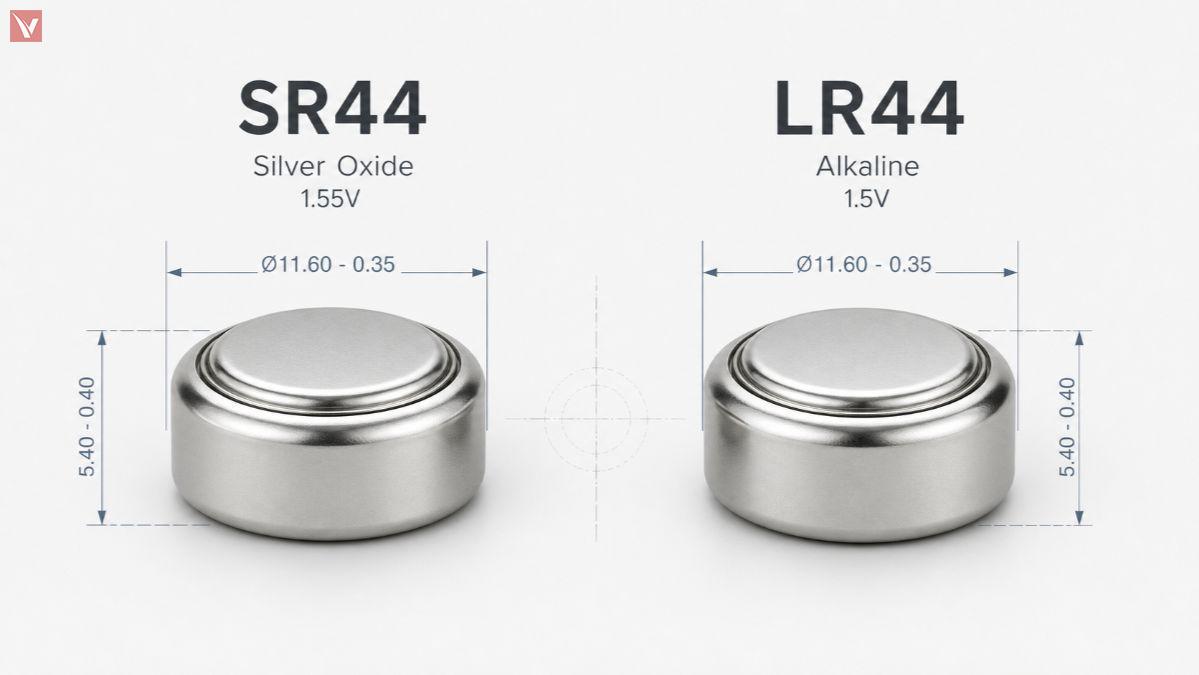
-
SR44 Battery: Uses silver oxide (Ag₂O) chemistry
-
LR44 Battery: Uses alkaline (Zn/MnO₂) chemistry
The key takeaway: same size does not mean same performance.
Comprehensive Cross Reference and Equivalent Table
| Specification | SR44 | LR44 |
|---|---|---|
| Battery Type | Silver Oxide Button Cell | Alkaline Button Cell |
| IEC Code | SR44 | LR44 |
| Common Cross References | 357, 303, SR44W, SR44SW, S76, SG13, SR1154 | AG13, A76, L1154, LR1154, 157, G13A |
| Nominal Voltage | 1.55V | 1.5V |
| Typical Open-Circuit Voltage | 1.55V to 1.62V | 1.50V to 1.60V |
| Rated Capacity | 160–200 mAh | 110–130 mAh |
| Discharge Curve | Flat and stable voltage output | Gradual voltage decline during discharge |
| Internal Chemistry | Silver Oxide (Ag₂O) | Alkaline (Zn/MnO₂) |
| Diameter | 11.6 mm | 11.6 mm |
| Height | 5.4 mm | 5.4 mm |
| Weight | About 2.3–2.5 g | About 2.3–2.5 g |
| Temperature Performance | Better stability in a wider range of operating conditions | More sensitive to performance drop in demanding conditions |
| Shelf Life | 5–10 years | 2–3 years |
| Leakage Risk | Lower leakage risk, better long-term storage behavior | Higher leakage risk after deep discharge or long storage |
| Typical Applications | Digital calipers, watches, medical devices, precision meters | Toys, calculators, LED keychains, low-drain consumer devices |
| Interchangeability | Can usually replace LR44 in many devices | Not recommended to replace SR44 in precision equipment |
| Price Level | Higher | Lower |
| Packaging Options | Blister pack, shrink pack, bulk tray, OEM carton | Blister pack, shrink pack, bulk tray, OEM carton |
| Market Positioning | Premium performance battery | Economical general-purpose battery |
| Best Choice For | High-precision, long-life, stable-voltage applications | Cost-sensitive, low-power applications |
SR44 vs LR44 Voltage Stability Comparison
-
SR44 (Silver Oxide) maintains a flat discharge curve, delivering a stable ~1.55V throughout most of its life.
-
LR44 (Alkaline) exhibits a sloping discharge curve, with voltage gradually dropping from 1.5V.
-
Measurement errors
-
Display dimming
-
Premature shutdown
SR44 vs LR44 Battery Capacity Differences
-
SR44: Typically 160–200 mAh
-
LR44: Typically 110–130 mAh
SR44 vs LR44 Expected Lifespan Evaluation
-
SR44 Shelf Life: 5–10 years
-
LR44 Shelf Life: 2–3 years
-
SR44 lasts longer due to stable voltage and higher capacity
-
LR44 may require frequent replacement, especially in moderate-drain devices
SR44 vs LR44 Leakage Risk Assessment
-
SR44 batteries are engineered with better sealing and lower internal pressure, reducing leakage risk.
-
LR44 batteries are more prone to leakage, particularly when:
-
Fully discharged
-
Stored in high temperatures
-
Left inside devices for extended periods
-
SR44 vs LR44 Manufacturing Cost Analysis
-
Uses alkaline chemistry (Zn/MnO₂), which relies on cheaper, commodity-grade materials
-
Has a simpler manufacturing process with lower raw material expense
-
Is optimized for low-cost, low-drain applications where the lowest unit price is the priority
-
Benefits from broader commodity positioning, making it easier and cheaper to produce at scale
-
Uses silver oxide chemistry (Ag₂O), and silver is inherently more expensive than alkaline materials, creating a higher base cost
-
Must deliver a flatter discharge curve, better voltage stability, and longer shelf life, which requires tighter process control and more consistent electrochemical performance
-
Is typically sold for precision applications such as watches, calipers, medical instruments, and other sensitive devices
-
Requires stricter quality standards, lower leakage risk, and more stable batch-to-batch output, which increases testing, inspection, and rejection costs during manufacturing
SR44 vs LR44 Ideal Application Scenarios
-
Digital calipers and micrometers
-
Watches (especially analog quartz)
-
Medical devices
-
Cameras and sensors
-
Toys
-
LED keychains
-
Calculators
-
Low-cost consumer gadgets
Assessing Total Cost of Ownership for Bulk Procurement
-
Less frequent battery replacements in precision devices
-
Lower risk of performance issues tied to voltage drop
-
Reduced inventory waste from batteries that age out before use
-
For high-precision or long-life equipment (calipers, watches, medical devices), SR44 is often the more cost-effective option over time.
-
For low-drain, cost-sensitive consumer products (toys, LED keychains, calculators), LR44 can be the right choice as long as replacement frequency is acceptable.
Simple Ways to Spot Fake Silver Oxide Cells
-
Measure Open-Circuit Voltage
-
SR44: typically ~1.55V–1.60V
-
LR44: typically ~1.50V or lower
-
Check Discharge Behavior
-
A quick voltage drop under load suggests alkaline chemistry
-
Verify Markings and Packaging
-
Look for trusted brands and clear labeling (e.g., “Silver Oxide”)
-
Use a Multimeter Under Load
-
True SR44 maintains stable voltage
-
Fake or LR44 substitutes show noticeable decline
FAQs
-
Are SR44 and LR44 the same battery?
No. SR44 is a silver oxide button cell and LR44 is an alkaline button cell, but they share the same 11.6 mm × 5.4 mm size and similar voltage. -
Are SR44 and LR44 fully interchangeable in all devices?
They are physically interchangeable, but SR44 is recommended for precision or long‑life devices because it offers a flatter discharge curve, higher capacity and longer shelf life than LR44. -
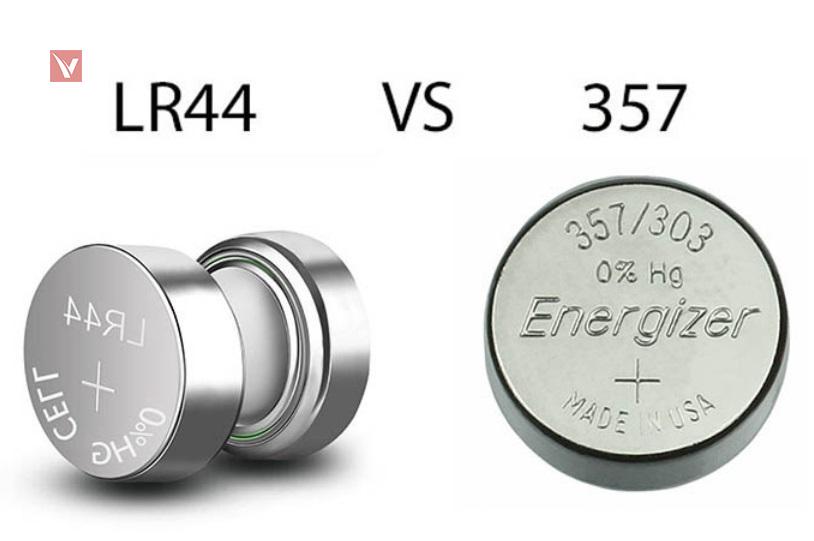
Are LR44 batteries the same as 357 batteries?
They are the same size and can often be used in the same devices, but 357 is a silver oxide type (similar to SR44), so it usually lasts longer and keeps a more stable voltage than an alkaline LR44. -
Is LR44 the same as AG13 or A76?
Yes. LR44, AG13 and A76 are common equivalent codes for the same size alkaline button cell; you can usually treat them as interchangeable if the voltage and chemistry match the datasheet. -
When should I choose SR44 instead of LR44?
Choose SR44 for digital calipers, watches, medical devices and other precision instruments where stable voltage, longer runtime and lower leakage risk are more important than the lowest unit price.